
Fashion
Threads of Memory: Inside Therez Fleetwood’s Harlem Renaissance Reverie
By Maricopa Lifestyle Staff · October 21, 2026
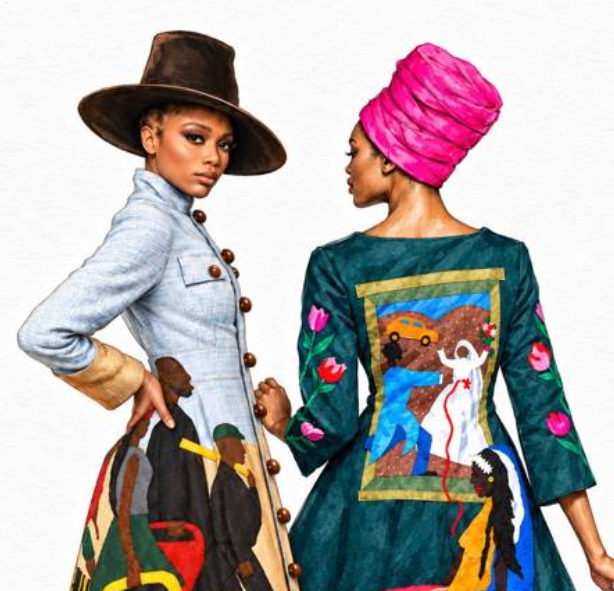
Stitch by stitch, textile artist Therez Fleetwood turns the masterpieces of the Harlem Renaissance into wearable works of art. Discover the story behind her twelve-piece collection and why she calls herself a cultural archivist.
When Therez Fleetwood sits down to build a coat, she isn't just choosing fabric — she's choosing which story gets carried forward. Her latest body of work, The Harlem Renaissance Reverie, is a twelve-piece collection of wearable textile art, including a series of coats inspired by Jacob Lawrence. Fleetwood calls the pieces "art first, fashion second." Developed in 2024, the collection has since traveled to exhibitions in New Jersey and Atlanta, Georgia, each coat built one hand-appliquéd stitch at a time, using fashion silhouette as canvas rather than runway as destination.
Maricopa Lifestyle caught up with Fleetwood to talk about the inspiration behind the collection, the painstaking process behind each piece, and why she calls herself not just a designer, but a cultural archivist.
Honoring the Artists Who Centered Black Life

Each coat reinterprets the visual language of a different Harlem Renaissance artist.
The Jacob Lawrence-inspired coats are only one thread in a larger tapestry. Across the Harlem Renaissance Reverie collection, Fleetwood draws on the visual language of five artists: Elizabeth Catlett, Romare Bearden, Lois Mailou Jones, Palmer Hayden, and William H. Johnson.
"I selected each artist because they placed Black people at the center of their work, depicting everyday life, family, labor, achievement, struggle, and joy," Fleetwood explains. Through painting, collage, printmaking, and sculpture, these artists preserved cultural memory — carrying stories of migration, ancestry, folklore, and community across generations, and expanding the representation of Black people with individuality, dignity, and historical significance.
Fleetwood's coats translate that range of visual language into textile form, each piece united, as she puts it, by "an affirmation of Black life and cultural identity."
The Hands Behind Every Stitch

Appliqué detail on one of the collection's coats, built one stitch at a time.
Nothing about the Harlem Renaissance Reverie collection is mass-produced. Fleetwood builds each coat from a natural-fiber foundation, using wool felt appliqué as her paint and the needle as her brush. Every piece is entirely hand-made, with appliqué work applied one stitch at a time across eleven distinct steps from start to finish.
"I cannot place an exact time frame on the creation of a piece because there are so many elements involved," she says. While developing this collection, she typically worked on two to three coats at once, letting each take the time it needed.
That meticulous construction is also why the coats rarely appear on a traditional runway — they're delicate by design, built for exhibition and contemplation rather than everyday wear. Custom orders are available for collectors, but Fleetwood is candid about what that means: these are art pieces to be worn with intention, not coats for daily rotation.
More Than a Garment: Cultural Archiving

Therez Fleetwood in her studio, beside one of the coats from the collection.
Ask Fleetwood what she does, and "designer" is only part of the answer. She describes herself as a cultural archivist — a term she defines in her own words:
"My work preserves and reinterprets stories, images, and traditions that deserve to be remembered. Through research and textile art, I bring Black history and cultural memory into tangible form, using fabric, stitching, and sculptural garments to connect the past with the present. Whether I am drawing inspiration from Harlem Renaissance artists or exploring Black figures in centuries of sacred art, I am honoring the people who came before us and inviting audiences to see their presence, dignity, and contributions. For me, cultural archiving means keeping these histories alive so future generations can recognize themselves as part of the story."
In Her Own Words

One of Fleetwood's bridal-themed textile art pieces.
Fleetwood hopes viewers leave her exhibitions with more than admiration for craftsmanship:
"My hope is that people see more than a beautiful garment — that they recognize the history it carries, feel connected to the lives it honors, and become curious about the stories woven into every stitch. I want my work to remind us that Black history is something we carry, celebrate, and pass on."
Where to See the Work

An illustrated rendering of two pieces from the collection.
The Harlem Renaissance Reverie collection continues to travel, and Fleetwood is already looking ahead to her next chapter: a 2027 solo exhibition at the Emma Darnell Aviation Museum & Conference Center in Atlanta, Georgia.
To see more of her work, visit therezfleetwoodart.com, read her full artist bio, or follow her on Instagram @therezfleetwood.
References
Therez Fleetwood Art: https://www.therezfleetwoodart.com/
The Artist: https://www.therezfleetwoodart.com/the-artist.html
The Collection: https://www.therezfleetwoodart.com/the-collection.html
Therez Fleetwood on Instagram: https://www.instagram.com/therezfleetwood/
Interview with Therez Fleetwood, Maricopa Lifestyle Magazine, 2026